

The Science of Colostrum: Why the First Hours Matter
Adapted from an original article by Dr. Anthony Kleinsmith, published July 10, 2026
Introduction: Why Early Colostrum Matters
Bovine colostrum is a remarkable natural substance produced around the time of birth. Rich in immunoglobulins, growth factors and essential nutrients, it provides vital support for newborn calves. Discover the science of colostrum, how it is formed, why early collection matters and what makes first-milking colostrum unique.
Understanding the Science of Colostrum
Colostrum is nature's first source of nutrition for newborn mammals. Produced by the mammary glands around the time of birth, this remarkable fluid contains a concentrated combination of antibodies, proteins, growth factors, vitamins, minerals and other biologically active substances.
Unlike ordinary milk, colostrum has a specialised purpose. It provides early nutrition while helping newborn animals adapt to life outside the womb.
In cattle, colostrum plays an especially important role because calves are born with very little circulating maternal antibody protection. Unlike human babies, who receive substantial maternal IgG antibodies through the placenta before birth, calves depend on colostrum to acquire these essential immune proteins.
This difference explains why the timing, quality and quantity of bovine colostrum are so important.
Understanding how colostrum is produced, what it contains and how its composition changes after birth reveals why scientists continue to study this extraordinary natural substance.
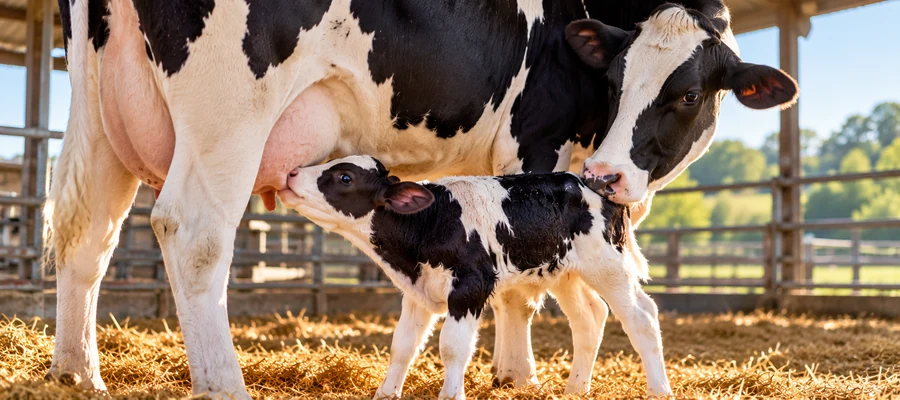
The first hours of a newborn calf's life are especially important. Unlike humans, cattle do not transfer significant amounts of maternal antibodies across the placenta before birth. Instead, calves depend on early consumption of bovine colostrum to receive immunoglobulins that provide passive immune protection. This natural process demonstrates why colostrum quality, collection timing and adequate feeding are essential considerations in dairy calf management.

Why Colostrum Is Essential for Newborn Calves
A newborn calf enters the world with an immature immune system and limited circulating maternal antibodies. Although its body can begin developing its own immune responses, this process takes time.
Colostrum provides immediate support through a process known as passive transfer of immunity.
When a calf consumes high-quality colostrum shortly after birth, immunoglobulins can pass through the intestinal lining and enter its bloodstream. These maternal antibodies help protect the calf while its own immune system develops.
Research has consistently linked inadequate passive transfer with increased risks of illness, poor growth and mortality in dairy calves.
Successful colostrum management therefore depends on three important factors: providing sufficient colostrum, ensuring it contains adequate antibody concentrations, and feeding it promptly after birth.
Early feeding is particularly important because the calf's ability to absorb intact antibodies decreases rapidly during its first day of life.
For dairy farmers, good colostrum management is one of the most important foundations of newborn calf health.
What Makes Bovine Colostrum So Unique?
Bovine colostrum is much more than an early form of milk. It is a complex biological fluid containing hundreds of components that contribute to nutrition, immune function and early development.
Its composition differs considerably from mature milk, particularly in its concentration of immune proteins and other bioactive substances.
Important components of bovine colostrum
| Component | Biological role |
|---|---|
| IgG immunoglobulins | Principal antibodies responsible for systemic passive immunity in calves |
| IgA immunoglobulins | Help protect mucosal surfaces, including the digestive tract |
| IgM immunoglobulins | Participate in early immune responses |
| Lactoferrin | An iron-binding protein studied for antimicrobial and immune-related functions |
| Growth factors | Participate in cellular signalling, tissue growth and development |
| Cytokines | Help regulate communication between immune cells |
| Proteins and peptides | Provide amino acids and contribute to biological functions |
| Vitamins and minerals | Support normal metabolism, growth and development |
The precise concentration of these components varies between cows and depends on factors such as genetics, parity, health, nutrition and collection conditions.
This natural variability is one reason that careful sourcing and quality testing are important when evaluating bovine colostrum.
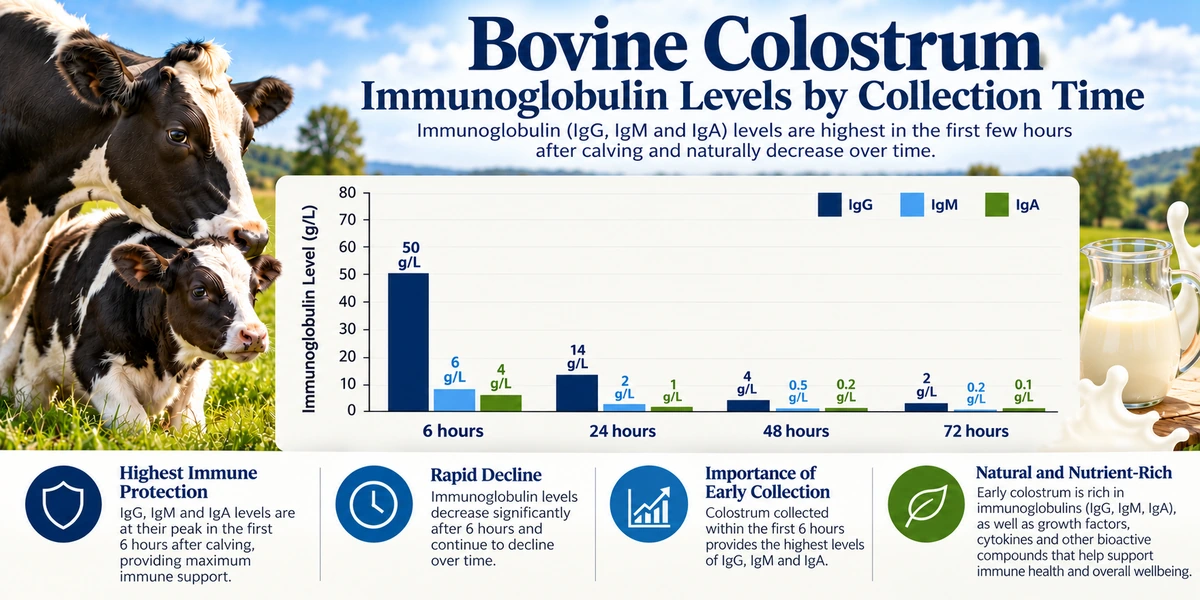
Bovine colostrum contains several important immunoglobulins, including IgG, IgA and IgM. Their concentrations change substantially during the period following calving. This infographic provides a visual comparison at 6, 24, 48 and 72 hours, helping explain the relationship between collection timing and the immunoglobulin composition of bovine colostrum.
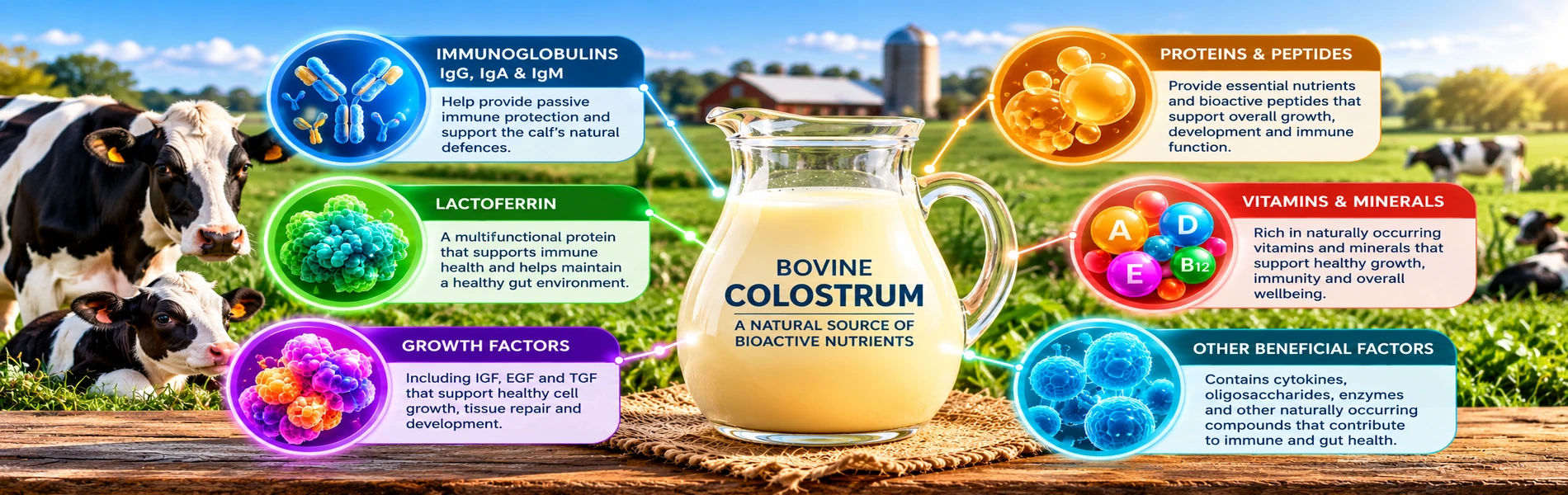
Bovine colostrum contains a remarkable combination of naturally occurring immune proteins, growth factors and essential nutrients. Unlike mature milk, first-milking colostrum is particularly rich in immunoglobulins, including IgG, IgA and IgM. It also contains lactoferrin, bioactive peptides, vitamins, minerals and cellular signalling compounds. Together, these components contribute to the specialised nutritional and biological role of colostrum during the earliest stages of a newborn calf's life.
Colostrogenesis: How Colostrum Is Produced
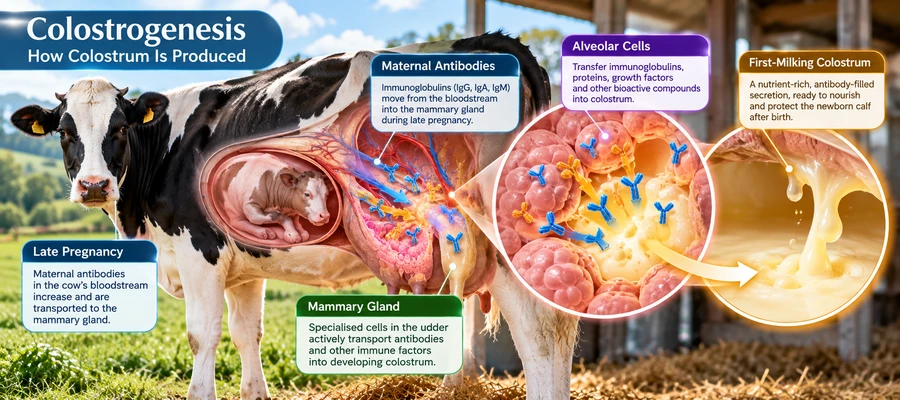
The production and accumulation of colostrum before birth is called colostrogenesis.
This highly coordinated biological process begins during late pregnancy as the cow's mammary gland prepares to nourish and protect her newborn calf.
In the weeks leading up to calving, maternal antibodies, particularly IgG1, are selectively transported from the bloodstream into mammary secretions. At the same time, the mammary gland accumulates proteins, nutrients and other biologically active substances.
Hormones play an important role in regulating this process.
As calving approaches, changes in progesterone, prolactin and other hormones help prepare the mammary gland for the transition from colostrum production to mature milk secretion.
After birth, milk production increases and the concentrations of many colostrum-specific components begin to decline.
This transition explains why the first secretion collected after calving is biologically different from milk produced during subsequent milkings.
Colostrogenesis demonstrates that colostrum is not simply concentrated milk. It is the result of a specialised biological process designed to support newborn survival.
Colostrogenesis is the specialised biological process through which bovine colostrum forms in the mammary gland before calving.
During the final weeks of pregnancy, maternal antibodies, particularly immunoglobulin G1 (IgG1), are selectively transported from the cow's bloodstream into mammary secretions.
Alongside these antibodies, proteins, growth factors and other naturally occurring compounds accumulate to create the nutrient-rich fluid known as colostrum.
Hormonal changes surrounding birth then help the mammary gland transition from colostrum formation to milk production.
Why the First Six Hours Matter
The timing of colostrum collection is one of the most important considerations when evaluating its quality.
Colostrum collected from the first milking generally contains higher concentrations of immunoglobulins and other bioactive components than milk obtained from later milkings.
Following calving, the mammary gland gradually transitions toward producing mature milk.
As secretion volumes increase, the concentrations of many colostrum components decrease.
For this reason, collecting first-milking colostrum promptly, ideally within six hours of calving, is a useful quality-management practice.
However, six hours is not an absolute biological cut-off. Colostrum quality varies between animals, and antibody concentration cannot be determined by collection time alone.
Factors including prepartum milk leakage, collection delays, milk yield and individual cow differences can influence quality.
Reliable assessment therefore combines early collection with appropriate handling, hygiene and quality testing.
For manufacturers of bovine colostrum supplements, documented collection practices and independent testing provide stronger evidence of quality than collection-time claims alone.
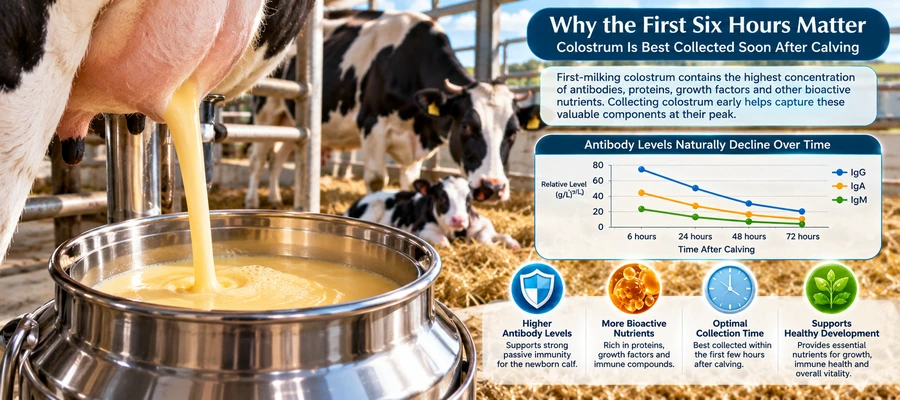
The first six hours after calving represent an important period for bovine colostrum collection.
First-milking colostrum is generally richer in immunoglobulins, growth factors and other bioactive compounds than milk obtained during subsequent milkings.
As the mammary gland transitions toward producing mature milk, concentrations of many of these components decrease.
Collecting colostrum promptly is therefore an important quality-management practice, although actual antibody concentrations depend on individual cows, collection conditions and laboratory testing.
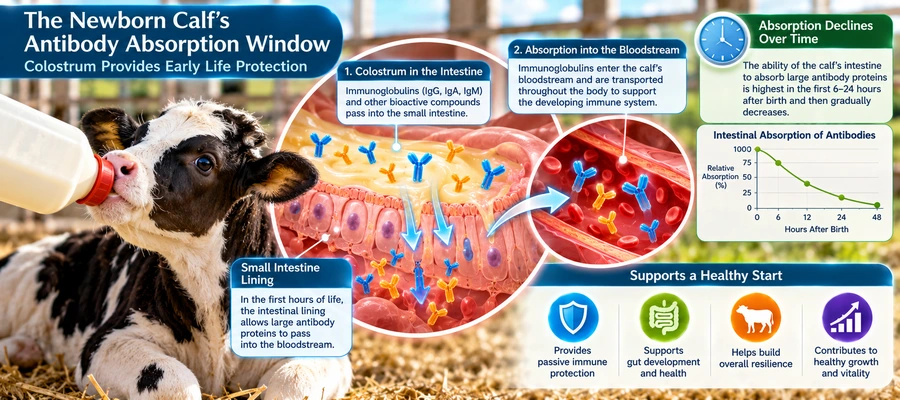
The Newborn Calf's Antibody Absorption Window
The importance of early colostrum feeding becomes clearer when we examine the newborn calf's digestive system.
During the first hours after birth, specialised intestinal cells can absorb large proteins, including maternal immunoglobulins, and transfer them into the bloodstream.
This process allows the calf to acquire passive immune protection.
However, the intestine's ability to absorb intact antibodies decreases rapidly after birth. This process is commonly called gut closure.
Absorption efficiency is greatest soon after birth, declines over the following hours and becomes very limited by approximately 24 hours.
Importantly, gut closure is a gradual physiological process rather than an event that occurs precisely at six or eight hours.
For this reason, dairy management recommendations emphasise feeding adequate, high-quality colostrum as soon as possible after calving.
The interaction between colostrum composition and the newborn calf's digestive development illustrates the close biological relationship between mother and offspring.
A newborn calf's digestive system has a remarkable ability to absorb maternal antibodies from colostrum during the earliest hours of life. After colostrum enters the small intestine, specialised intestinal cells allow intact immunoglobulins to pass into the bloodstream. This process, known as passive transfer of immunity, provides important early protection while the calf's own immune system develops. However, the intestine's ability to absorb these large proteins declines rapidly after birth, making prompt colostrum feeding particularly important.
Bovine Colostrum and Human Nutrition Research
The biological complexity of bovine colostrum has attracted interest beyond animal agriculture.
Researchers have investigated bovine colostrum as a nutritional ingredient because it contains immunoglobulins, lactoferrin, growth factors and other compounds that may interact with the human digestive and immune systems.
Areas of scientific investigation include intestinal barrier function, gastrointestinal health, exercise-associated physiological stress and immune-related responses.
Some clinical studies have reported promising findings. However, results differ depending on the population studied, the preparation used, the dosage and the outcomes measured.
It is also important to distinguish between newborn calves and adult humans.
Unlike newborn calves, healthy adults do not normally absorb large quantities of intact dietary antibodies into their bloodstream. Instead, bovine colostrum components may act locally within the digestive tract or be broken down during digestion.
Consequently, the established benefits of colostrum for newborn calves cannot automatically be applied to human supplementation.
Further well-designed human clinical trials are needed to clarify which benefits are reproducible and clinically meaningful.
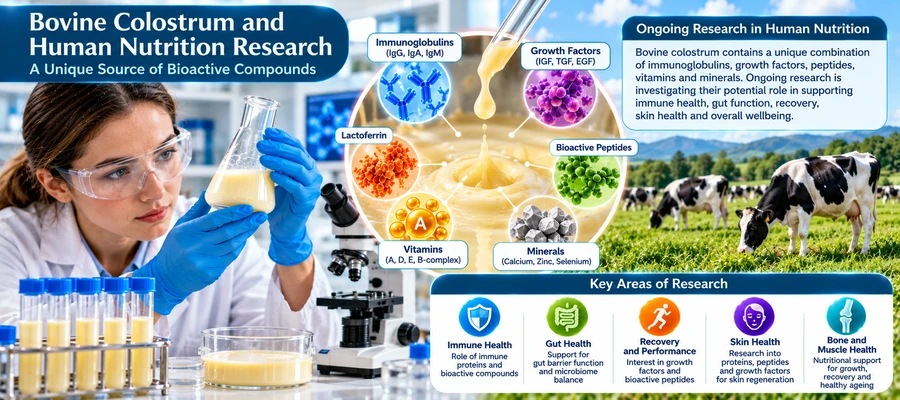
Bovine colostrum has attracted growing scientific interest because of its unique combination of immunoglobulins, lactoferrin, growth factors and other naturally occurring bioactive compounds.
Researchers are investigating how these substances may interact with the human digestive and immune systems.
Areas of study include intestinal barrier function, gastrointestinal health and responses to exercise-related physiological stress. Although some findings are promising, further high-quality clinical research is needed to establish consistent benefits and determine appropriate applications in human nutrition.

What Determines Colostrum Quality?
High-quality bovine colostrum begins with responsible dairy management.
Although early collection is important, it is only one part of the overall quality picture.
The health and nutritional status of the cow, the conditions surrounding calving and the procedures used to collect and preserve colostrum can all influence the finished material.
Important considerations include:
-
Collection timing: Obtaining first-milking colostrum promptly after calving.
-
Antibody concentration: Measuring immunoglobulin levels rather than relying solely on collection time.
-
Cow health and management: Maintaining appropriate nutrition, welfare and herd health practices.
-
Hygienic collection: Minimising bacterial contamination during handling.
-
Processing and storage: Protecting the integrity of sensitive proteins while ensuring microbiological safety.
-
Product verification: Using appropriate laboratory testing and traceability procedures.
These factors help explain why bovine colostrum products can differ substantially in composition and quality.
Understanding these differences allows consumers to make more informed decisions about colostrum sourcing and manufacturing standards.
The quality of bovine colostrum is influenced by more than how quickly it is collected after calving.
Cow health, nutrition, farm management, hygienic collection and laboratory testing all contribute to the quality of the final product.
First-milking colostrum is naturally rich in immunoglobulins and other bioactive compounds, but concentrations vary between individual cows.
Understanding these factors helps explain why careful sourcing, processing and quality verification are important when evaluating bovine colostrum supplements.
Good farm management supports colostrum quality, but it does not guarantee higher antibody concentrations. Actual immunoglobulin levels vary with factors such as parity, breed, individual physiology and collection conditions.
For human dietary supplements, quality evaluation should also consider processing methods, microbiological safety and independently verified composition.
Six important factors
-
Cow health and welfare: Healthy, properly managed cows are an important foundation for quality colostrum production.
-
Nutrition and feeding: Balanced nutrition supports maternal health and normal mammary gland function.
-
Collection timing: Prompt collection after calving helps limit changes associated with delayed collection.
-
Hygienic handling: Clean equipment, appropriate cooling and careful processing help reduce contamination.
-
Laboratory testing: Testing can verify immunoglobulin concentrations and assess microbiological quality.
-
Farming environment: Responsible management, suitable housing and low-stress handling support dairy herd welfare.
Nature's First Nutritional System
Colostrum represents one of nature's most carefully coordinated nutritional systems.
Produced before and immediately after birth, it delivers a concentrated mixture of immune proteins, nutrients and signalling compounds at a time when newborn mammals need them most.
In cattle, this system is particularly important because maternal antibodies are not transferred across the placenta in significant quantities.
The calf must therefore obtain its initial passive immune protection through timely colostrum consumption.
Scientific research has established the essential role of colostrum in calf health while continuing to investigate its wider nutritional properties.
From colostrogenesis and immunoglobulin concentration to collection timing and intestinal absorption, every stage contributes to our understanding of this remarkable biological fluid.
The science of colostrum demonstrates why its earliest production and collection deserve special attention — and why quality should always be supported by sound scientific evidence.
What to look for in a bovine colostrum supplement
-
First-milking collection: Look for clear information about when colostrum is collected after calving.
-
Responsible dairy sourcing: Consider cow welfare, nutrition and farm management practices.
-
Careful processing: Look for appropriate handling and processing methods designed to maintain product quality.
-
Laboratory testing: Check whether immunoglobulin content, microbiological quality and purity are verified.
-
Product transparency: Look for clearly stated ingredients, sourcing information and manufacturing standards.
-
Reliable product information: Choose suppliers that provide evidence-based information without exaggerated health claims.

Understanding the science of colostrum can help consumers make more informed decisions when selecting a bovine colostrum supplement.
First-milking colostrum is naturally rich in immunoglobulins, proteins and other bioactive compounds. However, collection timing is only one consideration.
Responsible dairy sourcing, hygienic handling, appropriate processing and verified product composition also contribute to supplement quality.
Looking for clear information about these factors can help consumers compare colostrum products more confidently.
Discover Anovité Colostrum6
Anovité Colostrum6 is a bovine colostrum supplement developed around the importance of early collection.
The Colostrum6 range emphasizes colostrum collected within the first six hours after calving.
For consumers exploring bovine colostrum supplementation, understanding collection timing, product composition and quality standards provides a useful foundation for evaluating available options.